
Starting your investment journey can be scary, especially when there are so many choices. One of the most frequently asked questions by a beginner is: What is SIP, and is it a good way to start investing? This guide makes it simple.
What exactly is SIP?
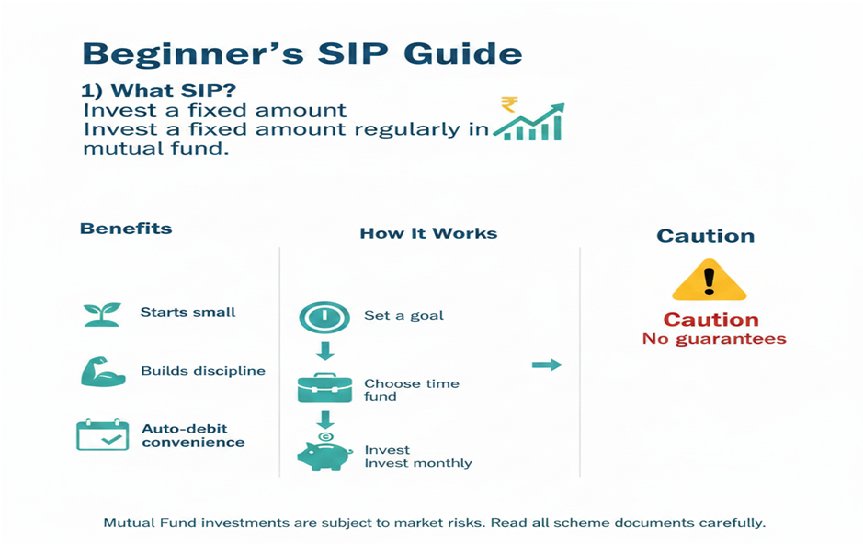
So what is SIP in the simplest sense? It stands for Systematic Investment Plan. It is a way of investing a fixed amount of money in a mutual fund scheme at regular intervals like monthly or quarterly. It is different from investing a big amount in one go. Instead of attempting to time the market with one big decision, you build your investment up gradually, instalment by instalment.
As a first time investor this structure also removes a lot of the pressure of “when” to invest. It is a process that works on a pre-set schedule that you set once and then let continue automatically.
Read More: The Principles of Value Investing Every Investor Should Know
Why Beginners Start Here – SIP
There are many reasons why SIP is often suggested as a good entry point for new investors:
- Low Entry Barrier: SIPs can start from as low as ₹100 per month (or any other amount as specified by the scheme and the platform) and are available for novice investors.
- No large upfront commitment needed: You don’t have to have a large corpus ready, just commit to a recurring amount that is manageable.
- Develops a habit: Regular instalments promote disciplined investing rather than haphazard, emotion-driven decisions.
- Automated process After you set up an auto-debit mandate, the instalments are processed on your chosen date without any manual intervention each time.
How the Process Works For a Novice
- Identify a financial goal – this could be retirement, a future home, your child’s education or simply long-term wealth creation.
- Decide how long you can remain invested, as your time horizon will determine the type of scheme that is right for you.
- Choose one after checking the objective, riskometer, and portfolio approach of the mutual fund scheme.
- Set an amount that is comfortable for your monthly budget.
- Complete KYC and Register your SIP Mandate.
What you need to know as a beginner before you start
Realize that SIP returns are not fixed but are linked to the market. The value of your mutual fund investment can go up or down based on the performance of the scheme, unlike a recurring deposit that offers a guaranteed interest rate. Returns are not guaranteed, and there is no capital protection.
That said, regular investing via SIP means your installments go in over different market levels over time, some at higher prices, some at lower ones, which can help smooth out the impact of short-term market movements.
Understanding More Deeply
If you’re still figuring out what SIP is and want a more comprehensive walk-through covering types of SIP, rupee cost averaging, and how to choose a scheme, our SIP Guide covers it all in detail.
Read More: A Look at Small Cap Stocks and the Price of Hindustan Copper Shares
Your Figures
Once you know how SIP works, it helps to see what could happen with different amounts and durations. The SIP Calculator takes your numbers and gives you an indicative estimate.
Last Thoughts
SIP provides a structured, low-pressure way for beginners to start investing in mutual funds. As you become more comfortable, you can review and change your amount, frequency or scheme choice as your goals and income change. This guide is brought to you by Tata Mutual Fund to help you start your investment journey with clarity.
Mutual Fund investments are subject to market risks. Read all scheme documents carefully.